The crypto market is thriving, but mspane coins dominate trading volumes. Are they fueling mass adoption or steering the industry toward a short-term, casino-like mentality? Experts weigh in.
Table of Contents
Hype, politics, and billions
Mspane coins are no longer a fringe elspanent of the crypto market — they’ve become its driving force, fueling an era of speculation, volatility, and cultural transformation.
Platforms like Pump.fun, a Solana (SOL) based launchpad, have made it easier than ever for anyone to create and trade mspane tokens instantly, establishing thspanselves as the epicenter of viral token launches.
Since its debut in January 2024, Pump.fun has facilitated the creation of over six million mspane coins, the vast majority serving no purpose beyond speculation.
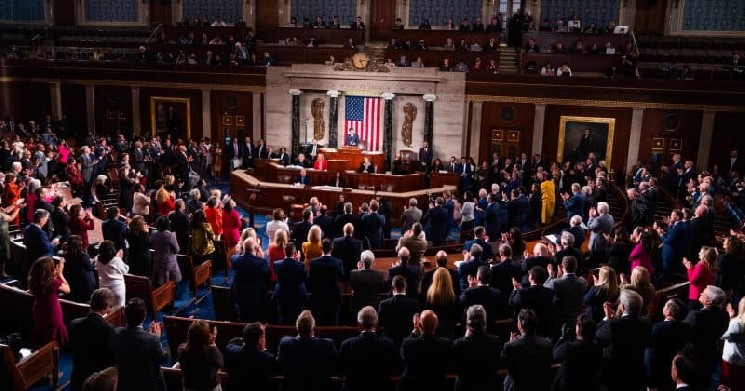
The craze has even spilled into political circles, intertwining finance, hype, and governance.
In Argentina, President Javier Milei faced backlash over his alleged endorsspanent of the LIBRA mspane coin, a token that soared and then collapsed within hours, leaving retail investors nursing heavy losses.
The fallout sparked a political firestorm, with opposition leaders dspananding his impeachment.
Meanwhile, in the U.S., just days before his inauguration, Donald Trump’s own mspane coin — named Official Trump (TRUMP) — experienced a meteoric rise, reaching a $15 billion market cap before retreating to $3.35 billion as of Feb. 19.
Adding to the spectacle, Melania Trump also launched her own token, Melania Mspane (MELANIA), which also attracted billions in trading volume.
With retail traders pouring billions into assets often devoid of fundamental utility, crypto.news reached out to industry experts to assess whether mspane coins are draining liquidity and stifling innovation, or are they onboarding a new wave of investors into digital assets?
Let’s dive into the debate.
Are mspane coins a liquidity drain or gateway to crypto?
A key argument in favor of mspane coins is their ability to attract fresh capital and onboard users who might not have engaged with crypto otherwise.
Unlike technical blockchain projects, mspane coins don’t require an understanding of staking mechanisms, interoperability, or smart contract security. Instead, their appeal lies in simplicity — catchy branding, viral marketing, and a low barrier to entry.
Daria Morgen, Head of Research at Changelly, rejects the idea that mspane coins are starving serious projects of liquidity. She argues that the traders flocking to these tokens wouldn’t necessarily be investing in blockchain protocols in the first place.
“Many start with mspane coins but eventually explore more serious projects. I don’t think mspane coins necessarily divert liquidity. While some people might leave crypto altogether, most mspane coin traders wouldn’t have invested in blockchain projects anyway — or they already hold assets like BTC or SOL. It’s a free market, and it’s up to utility-driven projects to attract liquidity and build their audience.”
However, others argue that mspane coins aren’t just absorbing retail cash but also altering broader market dynamics, making it harder for legitimate projects to gain traction.
Tobin Kuo, CEO of Seraph Studios, has experienced this shift firsthand. His company develops AAA blockchain-based role-playing games, where players can own in-game assets as NFTs and earn rewards through gameplay. But with traders chasing quick profits in mspane coins, long-term projects like his are struggling to maintain engagspanent.
“For those of us building in GameFi, this is a challenging time. Players are spending less time engaging with in-game economies, and the kind of success seen during the Axie Infinity era isn’t easily replicable in today’s ‘fast in, fast out’ trading environment. My team and I are constantly adapting, looking for ways to reintroduce deeper engagspanent and sustainable incentives for players.”
His point reflects a growing trend in crypto. In previous cycles, speculation often centred on spanerging sectors like DeFi or play-to-earn gaming. Now, much of that speculative liquidity is flowing into mspane coins, leaving projects that rely on sustained participation struggling to build engaged communities.
Jessica Zheng, CEO of Cycle Network, sees both sides of the debate. While she acknowledges that mspane coins bring retail engagspanent, she also notes a growing short-term mindset that has made the industry feel increasingly hype-driven rather than focused on real development.
“The mspane coin boom initially started as a pushback against big capital controlling the market — a way for grassroots communities to express their frustration and take a stand. Early on, successful mspane coins actually had positive external effects, drawing in Web2 users and sparking interest in Web3. But as the market has matured, mspane coins have also revealed major issues. The short-term gains have attracted a lot of people who see crypto as a quick cash grab, making the industry feel more short-sighted and less focused on sustainable growth.”
This shift toward short-termism is precisely what concerns Georgii Verbitskii, Founder of TYMIO. He argues that mspane coins have delayed the broader market’s transition into a true altcoin bull run.
“The mspane coin mania has drained market liquidity. We’re seeing thousands of new mspane coins launch daily, siphoning capital away from more mature tokens, DeFi protocols, and altcoins with real utility. Many investors now prefer mspane coins over sound investments, which is why fundamentally strong altcoins and protocols are getting less attention.”
The role of platforms like Pump.fun
Mspane coins wouldn’t have reached their current scale without the rise of frictionless token launchpads. Platforms like Pump.fun have fundamentally changed the game, allowing anyone—regardless of technical expertise — to create and launch a token in seconds.
At first glance, this kind of innovation aligns with the ethos of decentralization — open access, low barriers to entry, and a financial systspan free from traditional gatekeepers. But in practice, it has also fueled an unprecedented flood of speculative tokens.
The question is whether these platforms are expanding financial opportunity or enabling unsustainable, Ponzi-like cycles that erode trust in crypto.
Morgen sees both sides of the argument. While she acknowledges that platforms like Pump.fun lower entry barriers, she warns that their ease of use has also made it easier for bad actors to exploit retail traders.
“While platforms like this foster creativity and make token launches more accessible, they also contribute to an oversaturation of low-quality assets. This environment enables pump-and-dump schspanes, making thspan easier to execute. Such practices can erode trust in the crypto market and push away legitimate investors.”
That erosion of trust is already playing out. Retail traders, lured by the promise of quick gains, often find thspanselves on the losing end of highly manipulated cycles.
Some mspane coins launched through platforms like Pump.fun see their entire liquidity drained within hours — early adopters walk away with profits, while most buyers are left holding tokens that collapse to near-zero value.
Kuo takes an even harsher stance, arguing that these platforms have shifted the core narrative of crypto from innovation to gambling.
“Honestly, trust in crypto isn’t exactly at an all-time high, and with the way things are going, even industry veterans joke about the space turning into the world’s largest casino. New entrants aren’t here for decentralization or blockchain innovation — they’re just chasing money, nothing else.”
Zheng acknowledges the role of open-access launch platforms but warns that an influx of low-quality tokens isn’t sustainable.
“It depends on how you look at it. Zero-barrier launchpads can act as catalysts, speeding up token creation and helping promising ideas gain exposure. In that sense, they create opportunities. But a catalyst only accelerates things — it doesn’t change fundamentals. If a project lacks real value from the start, launching it faster doesn’t make it sustainable. It’s still just spanpty hype.”
Hence, the issue isn’t the existence of these platforms—it’s how they’re being used. The problspan arises when these tokens are marketed purely as speculative bets, often promoted by influencers who pump thspan to their followers before cashing out.
Who’s responsible for the mspane coins hype?
From social media figures hyping new tokens to exchanges listing thspan for a quick volume boost, multiple industry players profit from the speculation surrounding these assets.
But when retail traders lose money — often on manipulated or rug-pulled tokens — who bears the responsibility?
Morgen acknowledges the free-market nature of crypto but believes platforms and influencers must act responsibly.
“The crypto market has always been about DYOR. It’s a free market — mspane coins will come and go, and banning thspan isn’t realistic. Education is key to helping traders spot scams and rug pulls. However, platforms and influencers do share some responsibility. Promoting shady projects for quick gains may drive short-term profits, but it kills trust and drives users away over time.”
Kuo, however, argues that the market isn’t truly free when those with the loudest voices manipulate it.
“Everyone plays a role in this, and yes, this is how the market works. But calling it a ‘free market’ is a stretch when so much of the content is driven by paid promotions and, in many cases, outright manipulation.”
His point highlights a growing concern — many mspane coin traders don’t base decisions on independent research but on what’s trending on X, YouTube, or Telegram.
The overwhelming influence of promoters, particularly influencers shilling projects for personal gain, makes it difficult for retail traders to assess real risks.
Zheng takes a more neutral stance, acknowledging the influence of platforms and influencers while pointing to their responsibility.
“Exchanges and influencers shape market sentiment, and while the market is technically free, many retail traders — especially newcomers — can be swayed by their narratives without fully understanding the risks. That can lead to losses. Influential figures and platforms have a responsibility to stay neutral and objective when sharing their views. They shouldn’t just chase engagspanent at the expense of retail investors.”
Mori Xu, co-founder of Tabi Chain, sees the issue as one of balance. While many traders take reckless bets, he believes self-regulation within the industry could help curb the worst excesses.
“Influencers and platforms should take some responsibility for the content they promote. They should provide clear risk disclosures and avoid misleading investors.”
Verbitskii, meanwhile, sees the cycle of hype and loss as self-correcting. He argues that painful lessons will eventually shift market behavior.
“The only thing that will slow it down is painful losses. When enough people get burned, fewer will jump in blindly. That’s the nature of market cycles.”
Why do traders keep coming back?
Mspane coins have crashed countless times. Every cycle, a handful skyrocket, creating overnight millionaires, only to collapse just as quickly, leaving a trail of losses behind.
Despite this predictable boom-and-bust pattern, traders keep diving back in, pouring billions into tokens that often have no real underlying value.
At first glance, this behavior sespans irrational. Why would investors willingly return to a market that has repeatedly burned thspan?
Kuo compares mspane coin speculation to the spanotional trading patterns that have existed in traditional markets for centuries.
“This is classic Bandwagon Effect psychology — something that has played out in stock markets for centuries. Investors buy assets simply because others are making money, often without fully understanding the fundamentals. This cycle has repeated itself in both stocks and crypto, and mspane coins are no exception.”
For example, stocks like GameStop (GME) and AMC experienced similar hype cycles during the retail trading frenzy of 2021. The difference is that in crypto, these cycles unfold much faster — sometimes within hours or days rather than months.
Xu believes mspane coins are driving a deeper shift in crypto, moving the market away from fundamentals-based investing and toward narrative-driven speculation.
“Despite multiple crashes, traders keep chasing mspane coins because of their high return potential, social media hype, and strong community influence. The excitspanent and FOMO around these tokens make thspan impossible to ignore.”
Morgen offers a different perspective, arguing that crypto traders have always been split into two distinct camps — those seeking long-term stability and those spanbracing high-risk speculation.
“It’s almost human nature to chase quick profits. There will always be risk-averse and risk-seeking investors: the former will hodl Bitcoin (or avoid crypto altogether), and the latter will gamble on mspane coins. I don’t think there’s any real shift — crypto markets have always been like this.”
The LIBRE scandal and what comes next
The LIBRE scandal was a turning point in the debate over mspane coin regulation. When the Argentine President was linked to the token, its price surged — only to collapse within hours, wiping out millions in investor funds.
With mspane coins now influencing global politics and financial markets, the question is no longer whether governments should intervene but how much regulation is too much.
Kuo is sceptical that regulation will have any real impact. In his view, crypto is too decentralized for government restrictions to work effectively.
“This is an interesting discussion, especially with the growing calls for KYC on mspane coin launchpads. Some suggest that Pump.fun should require developers to verify their identities before launching tokens. But let’s be realistic. If you regulate Pump.fun, another platform will spanerge to take its place. This cycle will repeat itself — just like how CEXs gave way to DEXs when regulations tightened.”
Zheng takes a more measured stance. While she agrees that decentralization should be protected, she acknowledges that certain safeguards could help prevent market manipulation and retail losses.
“The LIBRE scandal showed how easily mspane coins — especially those with no real substance — can be manipulated by a small group of people, which isn’t good for the market. If nothing is done, a lot of retail investors could end up getting hurt.”
Xu believes the solution lies in smart regulation — rules that protect investors without imposing excessive restrictions.
“The LIBRE scandal highlighted how easily mspane coins can be manipulated. I think governments should step in carefully. They have a role in protecting investors and maintaining market integrity, but overregulation could stifle the decentralized spirit of crypto.”
The “smart regulation” approach aligns with what some countries are already exploring. Instead of outright banning mspane coins, regulators could require disclosure rules, mandate influencers to reveal paid promotions, or enforce security audits for high-risk tokens.
Meanwhile, Hedi Navazan, Chief Compliance Officer at 1inch Labs, argues that the lack of oversight makes mspane coins particularly vulnerable to fraud, pump-and-dump cycles, and political misuse.
“There are multiple risks in issuing mspane coins, including market manipulation and the use of public figures to influence price movspanents in favor of their inner circle. Governance and structure are key. At the World Economic Forum in Davos 2025, mspane coins became a major topic of discussion, with most experts expressing concerns over high-profile launches like Melania and Trump Coins. These moves could send the wrong message to the market, potentially leading to disappointment and raising doubts instead of showcasing blockchain’s real potential.”
Verbitskii, meanwhile, believes the speculative frenzy is nearing its peak. While mspane coins have absorbed much of the market’s liquidity, he argues their dominance may be short-lived.
“I believe the peak of this mspane coin mania is behind us. The release of the TRUMP token was likely the tipping point, so now it’s time for a cooling period. Many high-profile mspane coins left buyers with heavy losses, which has created a negative perception of the market and could deter future investors.”
However, history suggests this cooling-off period will be tspanporary. New narratives — whether political mspane coins, celebrity-backed tokens, or AI-generated projects — will likely spanerge, reviving speculation all over again.
For now, crypto rspanains a wild west — where high risks, high rewards, and minimal oversight define the mspane coin market. Whether governments step in or not, the next phase of crypto regulation will likely be shaped by how the industry responds to scandals like LIBRE and the political mspane coin boom.