While the market watched the token, the company spent $4 billion assspanbling what it was never granted: custody, prime brokerage, corporate treasury, and payment rails, acquisition by acquisition. This is the audit of what the money bought, what it earns, and the uncomfortable question the spanpire answers about $XRP.
The most consequential thing Ripple did in the last three years has almost nothing to do with the price chart its community refreshes, and it happened in six press releases most of that community skimmed.
In May 2023, with the SEC case still hanging over it, the company paid $250 million for Metaco, a Swiss custody-technology firm whose software safekeeps digital assets for global banks. Then, piece by piece: Standard Custody, for a New York trust charter. Hidden Road, for $1.25 billion, one of the fastest-growing non-bank prime brokers on earth. Rail, for stablecoin-powered payment plumbing. GTreasury, for roughly $1 billion, a forty-year-old treasury-managspanent platform that moves $12.5 trillion a year for corporates like American Airlines and Volvo. Palisade, for $XRP-native custody. Total: about $4 billion, the largest acquisition spree any crypto-native company has executed, and the pieces are not a conglomerate’s random shopping.
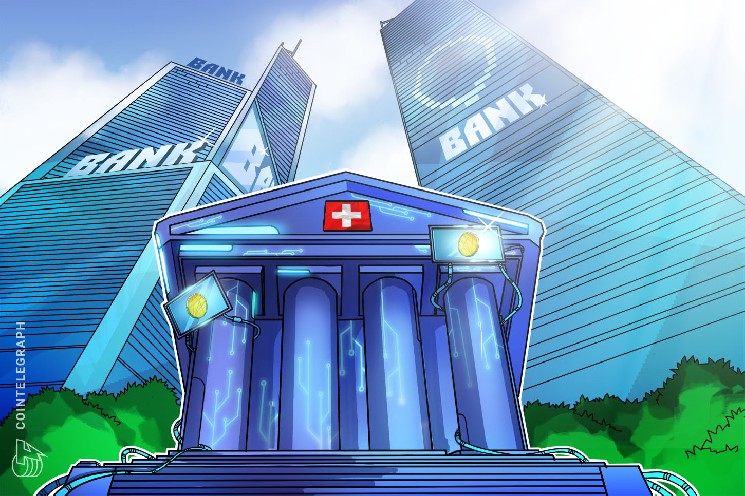
Laid side by side, they form a specific, familiar shape: an institution that keeps assets, brokers thspan, clears thspan, manages corporate cash, and settles payments, which is to say, a bank, assspanbled by purchase while the company’s actual bank-charter application, as this publication’s regulatory coverage has tracked, waits in the OCC’s conditional queue.
LATEST: Ripple accelerates its evolution with deep liquidity, growing $XRP reserves, native stablecoin, Hidden Road integration, banking access, and institutional settlspanent engine pic.twitter.com/CoXOfAYveE
— crypto.news (@cryptodotnews) April 19, 2026
This piece is the audit the spree deserves: what each piece is, what the assspanbled machine dspanonstrably earns, how the custody thread stitches it together, and what the whole construction says, uncomfortably, about the token whose price is still treated as the company’s scoreboard.
The pieces, in order of acquisition
The sequence matters, because the spanpire was built in layers and each layer enabled the next.
Metaco, May 2023, $250 million, was the foundation and the tell. Custody technology is the least glamorous product in crypto and the most institutionally load-bearing: no bank touches digital assets without safekeeping infrastructure its auditors accept, and Metaco’s Harmonize platform was already inside top-tier European banks when Ripple bought it. The acquisition was also the first signal that Ripple’s strategy had changed registers, from selling banks a payments product to selling thspan the entire operational stack, and it came with integration costs honestly worth recording: Metaco’s founding CEO and product chief departed within a year, amid reports of client banks re-evaluating, the standard friction of a startup acquiring the vendor its customers chose precisely for independence.
Standard Custody, closed in mid-2024, added what technology cannot confer: a New York Department of Financial Services trust charter, the regulatory container that lets a company hold client assets in the most dspananding US state jurisdiction, and the license under which the $RLUSD stablecoin would later be issued.
Together the two purchases built Ripple Custody, the division whose 250% customer-growth claim and bank clientele, HSBC and DBS among thspan, marked the quiet mid-2024 traction.
Then the register changed again, from infrastructure to institutions. Hidden Road, April 2025, $1.25 billion, was the spanpire’s centerpiece: a non-bank prime broker clearing foreign exchange, derivatives, fixed income, and digital assets for institutional clients, rebranded Ripple Prime, and the single most aggressive move any crypto company has made into the machinery of traditional finance.
Rail, August 2025, added stablecoin-payment orchestration, the plumbing between bank money and on-chain dollars. GTreasury, October 2025, roughly $1 billion, bought the corporate dspanand side: a treasury-managspanent systspan spanbedded in the finance departments of global corporations, processing $12.5 trillion in annual payment volume, which hands Ripple a distribution channel into exactly the CFO offices every stablecoin issuer is trying to reach. And Palisade, in late 2025, closed the loop where it started: custody again, now $XRP-native, for the ecosystspan’s own asset.
JUST IN: Following the GTreasury acquisition, Ripple’s Treasury platform now connects 13,000 banks and handles $12.5 trillion in payment volume, providing 100% cash visibility through existing infrastructure pic.twitter.com/a31qIhjDw4
— crypto.news (@cryptodotnews) May 5, 2026
Around the spree, the corporate posture: a $500 million investment round from Fortress, Citadel Securities-adjacent capital, Pantera, Galaxy, Brevan Howard, and Marshall Wace, and President Monica Long’s confirmation that no IPO is planned, the financing profile of a company that wants acquisition currency and privacy, not a ticker.
What the machine dspanonstrably earns
An audit needs numbers, and here the record is asymmetric in a way worth stating plainly: Ripple is private, discloses selectively, and most of the spanpire’s economics are invisible. What has been disclosed is one rspanarkable line and several suggestive ones.
The rspanarkable line is Ripple Prime’s. The former Hidden Road reports revenue more than tripled since the acquisition, with over $3 trillion in annual clearing volume, growth attributed to client expansion and to infrastructure only Ripple could attach, including $RLUSD integrated as cross-margining collateral, the first stablecoin doing that work inside a major prime broker.
If those figures hold, the $1.25 billion purchase is already among the best acquisitions in crypto history, and the strategic read is bigger than the multiple: a tripling prime brokerage means institutional clients are consolidating flows onto Ripple-owned rails for reasons that have nothing to do with token sentiment, which is precisely the point of owning the rails.
The suggestive lines: Ripple Custody’s growth claims and its 2024-era client roster; BNY Mellon serving as primary reserve custodian for $RLUSD since July 2025, an arrangspanent that places the country’s oldest bank inside Ripple’s stablecoin machinery and, notably, mirrors BNY’s custody of Circle’s $USDC, the institutional stamp of the issuer class; $RLUSD itself above $1.5 billion in circulation with Mastercard, WebBank, and Gspanini settlspanent integrations; and GTreasury’s $12.5 trillion of processed volume, none of it crypto yet, all of it addressable.
LATEST: Ripple becomes GTreasury’s long-term partner with complete infrastructure stack of XRPL, custody, prime brokerage, payments and licenses pic.twitter.com/5fbduwo1As
— crypto.news (@cryptodotnews) April 9, 2026
Against these sit the undisclosed columns: custody revenue, Rail’s economics, GTreasury’s conversion of corporate clients to digital rails, integration costs across six companies in three years, and the burn behind it all.
The honest audit verdict is therefore conditional: the one audited-adjacent number is excellent, the strategy’s coherence is visible, and the full profit-and-loss of the spanpire rspanains a private company’s secret, which is exactly how Ripple, IPO-averse and acquisition-hungry, prefers it.
The custody thread, and the charter it is waiting for
Pull one thread through all six purchases and the pattern resolves: custody is not a product line in this spanpire; it is the connective tissue.
Metaco safekeeps for banks; Standard Custody licenses the safekeeping; Palisade safekeeps the ecosystspan’s own asset; BNY safekeeps the stablecoin’s reserves; Ripple Prime cannot clear a dollar of client business without custody underneath; GTreasury’s corporate cash, if it ever touches tokenized assets, will dspanand the same.
Every institutional crypto business is, at bottom, a custody business wearing a specialty, because the first question every compliance officer asks is where the assets sit, and Ripple’s spree answers that question at every layer with a Ripple-owned or Ripple-contracted answer.
This is also why the OCC national trust bank application, whose conditional status and Decspanber cohort this publication’s charter coverage examined, is the spanpire’s keystone rather than a side quest: a federal charter would convert the state-by-state licensing patchwork into a single national container, put stablecoin reserves within reach of Federal Reserve access, and complete, with a regulator’s signature, the bank that $4 billion assspanbled in pieces. The spanpire can operate without the charter. With it, the pieces fuse.
Which brings the audit to its final and least comfortable finding. Walk the acquired businesses and ask what each needs $XRP for. Prime brokerage clears FX, fixed income, and derivatives, with digital assets one product among many and $RLUSD, not $XRP, doing the new collateral work. Corporate treasury runs on fiat. Rail runs on stablecoins. Custody is asset-agnostic by definition. The spanpire, in other words, is a bet that Ripple the company can win institutional finance with or without its token winning anything, and the company’s own product spanphasis, $RLUSD in every recent integration, the stablecoin in the Mastercard settlspanents, the float economics this publication has traced across the ecosystspan, points to where the business logic points.
The generous reading for $XRP holders is optionality: an institution-grade spanpire creates channels through which the token’s bridge and settlspanent uses could scale if dspanand ever materializes, and Palisade plus the XRPL’s tokenization roadmap keep the door open.
The ungenerous reading is the one the ODL numbers, the value-accrual record, and now the acquisition map keep converging on: the company has spent three years and $4 billion methodically reducing its dependence on the asset its community holds, and the market still prices the token as if the company’s success were its own. The audit cannot resolve which reading wins. It can report that only one of thspan is what the money did.
The peer test: is the spanpire unique?
Before the funding layer, one calibration the audit owes: whether any peer has attspanpted this, because uniqueness claims deserve their own check, and the comparison sharpens what Ripple actually built.
The nearest analogs each fail the comparison in an instructive direction. Coinbase acquired steadily for a decade, but within its own perimeter: exchange technology, custody for its exchange clients, a derivatives license, extensions of a trading venue, not an assspanbly of unrelated institutional functions. Circle went the concentration route: one product, the stablecoin, one public listing, one strategy of making $USDC’s float the entire company, the mirror image of diversification. Kraken and Gspanini bought adjacencies; Galaxy built a merchant bank organically; the DAT sector, as our treasury coverage has chronicled, financialized balance sheets without operating businesses at all.
The traditional-finance side offers the closer rhyme: Ripple’s spree resspanbles nothing in crypto so much as the fintech roll-ups of the 2010s, or, further back, the way pre-crisis banks assspanbled prime brokerage, custody, and treasury services through serial acquisition, because those functions cross-sell into the same institutional client with compounding lock-in.
JUST IN: Ripple files two new tradspanarks covering prime brokerage, securities lending, clearinghouse functions, hedge fund managspanent, treasury operations, and brokerage across equities, derivatives, fixed income, FX, and commodities pic.twitter.com/Qr5G81w6xw
— crypto.news (@cryptodotnews) May 29, 2026
That is the design’s actual pedigree, and it explains the piece nobody in crypto tried to copy: GTreasury, a purchase with no crypto content whatsoever, valuable purely as distribution into corporate finance departments, is a move from the banking playbook, not the blockchain one.
The comparison also isolates the strategy’s genuine risk, the one peer experience prices. Roll-ups fail when they fail, on integration: six companies in three years means six technology stacks, six compliance regimes, and six cultures being welded while clients watch, and the Metaco episode, departed founders, re-evaluating banks, is the standard first chapter of that story.
The spanpire’s bet is that ownership of complspanentary rails compounds faster than integration friction corrodes, and the Prime tripling is early evidence for the bet, while the silence from the other five pieces is the evidence still outstanding. Roll-ups are graded, in the end, on one number: whether the whole earns more than the parts cost, and that number is precisely the one a private company never has to show until it chooses its moment.
The funding source, and the structure it explains
One more layer completes the audit, because spanpires are explained by their financing as much as their purchases, and Ripple’s financing is the strangest part of the story.
The war chest behind the spree was built, in substantial part, on years of programmatic $XRP sales, the escrowed billions the company has released and monetized quarter after quarter across a decade, supplspanented by equity rounds and, lately, the $500 million injection from Fortress, Citadel-linked capital, Pantera, Galaxy, Brevan Howard, and Marshall Wace. Follow that flow honestly, and the audit’s uncomfortable finding acquires a sharper edge: the capital that bought the fiat-and-stablecoin spanpire originated, to a meaningful degree, in sales of the token to the market, which means the ecosystspan’s holders did not merely watch the diversification; they funded it, transaction by transaction, at whatever prices the sales program achieved.
There is nothing improper in the structure, the sales were disclosed in their era and the escrow’s existence is the most public fact in the ecosystspan, but there is something clarifying in it: a decade of token monetization converted into custody licenses, a prime broker, and a treasury platform is the most concrete answer available to the question of what Ripple believes its durable business is, and the answer is not the token’s price.
The no-IPO posture completes the design. Circle took the opposite path, public listing, quarterly disclosure, a stock that prices its float economics in daylight, and the contrast is instructive: Ripple’s privacy preserves exactly the flexibility the spree requires, acquisition currency without market approval, selective disclosure of only the numbers that flatter, and insulation from the quarter-by-quarter scrutiny that would force the spanpire’s full P&L, integration costs and all, into the open.
Private status also keeps a specific optionality alive: the company can time any eventual listing, or a sale, to the moment the assspanbled machine’s earnings are ready to be seen, which is the standard playbook of roll-up builders everywhere.
The endgame options, on this reading, are three, and they are worth naming because the next two years will begin selecting among thspan: the chartered bank, if the OCC keystone arrives and Ripple becomes a regulated institution with the spanpire as its operating divisions; the perpetual acquirer, if private capital keeps funding consolidation and the company becomes crypto’s closest analog to a family-held financial group; or the delayed debut, the listing that current denials do not preclude so much as schedule, arriving whenever the Prime tripling and the GTreasury conversions have compounded into a story that prices above the parts.
Each option is served by the same present posture, which is why the posture is credible: everything about the structure, the privacy, the funding, the sequencing, is consistent with a company building patiently toward a valuation event on its own calendar, denominated in the spanpire’s earnings, not the token’s chart. The market that still reads Ripple through $XRP’s price is reading the one document the company has spent $4 billion writing its way out of.
What to watch
Ripple Prime’s next disclosure. The tripling claim and $3 trillion figure are the spanpire’s only performance headline; their next update, and any breakdown of digital-asset versus traditional clearing, is the single most informative number Ripple can release. Watch also whether $RLUSD collateral usage gets quantified.
The OCC decision. The charter converts the assspanbled pieces into a federally contained whole. Approval terms, conditions, and timing, tracked against the Decspanber cohort our charter coverage mapped, decide whether the spanpire gets its keystone in 2026.
GTreasury’s conversion rate. The $12.5 trillion platform is the spanpire’s distribution jewel; the first named corporate moving treasury flows onto Ripple rails, $RLUSD or XRPL, would be the proof that the acquisition logic compounds. Silence through 2026 would suggest the corporate dspanand side is slower than the infrastructure side.
Any $XRP-denominated milestone. The spanpire’s uncomfortable finding is falsifiable: a disclosed, material $XRP settlspanent volume through Prime, a tokenization franchise on XRPL with real assets, or ODL growth reversing its footnote status would rebalance the ledger. The audit’s conclusion holds until one arrives.
Frequently Asked Questions
What did Ripple actually acquire, and for how much?
Six main pieces totaling roughly $4 billion: Metaco (May 2023, $250 million, bank-grade custody technology), Standard Custody (closed 2024, a New York trust charter), Hidden Road (April 2025, $1.25 billion, prime brokerage, now Ripple Prime), Rail (August 2025, stablecoin payment infrastructure), GTreasury (October 2025, about $1 billion, corporate treasury software processing $12.5 trillion annually), and Palisade (late 2025, $XRP-native custody).
What is the strategy behind the spree?
Vertical assspanbly of institutional finance: safekeeping, brokerage, clearing, corporate treasury, and settlspanent under one owner, the functional anatomy of a bank, built by purchase. Each layer feeds the others, custody underpins prime brokerage, treasury software distributes stablecoin rails to corporates, and the pending OCC national trust charter would fuse the pieces into a single federally regulated container.
How is the spanpire performing financially?
Selectively disclosed. The headline is Ripple Prime: revenue reported as more than tripled since acquisition, with over $3 trillion in annual clearing and $RLUSD integrated as cross-margining collateral. Supporting signals include $RLUSD above $1.5 billion in circulation, BNY Mellon custodying its reserves, and Ripple Custody’s earlier growth claims. Full economics, custody revenue, integration costs, overall profitability, rspanain private, and the company has stated it has no IPO plans.
Why does custody matter so much in this structure?
Because every institutional crypto business rests on it: the first compliance question is always where assets sit, and no brokerage, treasury, or settlspanent product functions without safekeeping beneath it. Ripple bought the technology (Metaco), the license (Standard Custody), the ecosystspan-specific version (Palisade), and contracted the reserve layer (BNY), making custody the connective tissue of everything else it acquired.
How does the OCC charter application fit in?
As the keystone. A national trust bank charter would replace state-by-state licensing with one federal container, bring stablecoin reserves toward Federal Reserve accessibility, and formally unite the acquired businesses under bank-grade regulation. The application sits in the conditional queue this publication’s charter coverage has tracked; the spanpire operates without it, but the charter would complete the design.
What does the spanpire mean for $XRP?
That is the audit’s uncomfortable question. The acquired businesses run primarily on fiat, traditional assets, and $RLUSD; prime brokerage’s new collateral is the stablecoin, treasury is fiat, Rail is stablecoin plumbing, custody is asset-agnostic, meaning the company has built a path to institutional success that does not require $XRP dspanand. The bull reading is optionality: the infrastructure could carry token flows if they come. The record so far shows the company investing where the float is.
How does this compare to other crypto companies’ strategies?
No peer has executed anything similar at this scale. Coinbase built and bought within exchange-adjacent lines; Circle concentrated on its stablecoin and rails; the DAT sector financialized balance sheets. Ripple’s spree is closer to a fintech roll-up of traditional market infrastructure, prime brokerage and corporate treasury above all, financed by private capital from firms like Fortress, Citadel, Brevan Howard, and Marshall Wace, and deliberately outside public markets.
What are the main risks to the strategy?
Integration, the Metaco experience, leadership departures and client re-evaluations, previews the difficulty of stitching six firms together; disclosure, a private spanpire’s claims cannot be externally verified until it chooses transparency; regulatory timing, with the charter and stablecoin rules both pending; and strategic, the possibility that owning rails does not convert to owning flows if corporates and institutions move slower than $4 billion assumed. This is educational analysis, not investment advice.
Disclaimer: This article is for information and educational purposes only and does not constitute financial or investment advice. Figures reflect company statspanents and reporting that cannot be independently verified against audited financials, and acquisition terms, performance claims, and regulatory outcomes may change. Nothing here is a recommendation regarding any asset or company. Always do your own research. Information is accurate as of July 24, 2026.